
Your Jewelry Box Might Be Worth Thousands: 2026 Precious Metals Guide for Columbus Sellers
Stop what you're doing and take another look at that “junk” jewelry box—because gold has officially smashed through the $5,000/oz mark.
Yep. The modern gold rush is here, and it might be happening in your sock drawer.
A lot of experts still think it’s climbing, which is exactly why right now is the ultimate moment to sort, test, and sell (before prices shift again or the good stuff gets donated by accident). And the best part? You don’t need a velvet-lined heirloom case to cash in. We’re talking broken chains, lonely earrings, bent rings, and mystery pieces you’ve been side-eyeing for years.
That’s where Buckeye Downsizing Services comes in. Kelly and Ty are the perfect duo for this kind of treasure hunt: Kelly has the sharp “research queen” eye for marks, makers, and sneaky designer pieces, and Ty brings decades of auction and precious-metal know-how to quickly spot real gold vs. costume—so clients get every penny of that record-breaking value (and not a penny less). (And just to be clear: Buckeye doesn’t perform official jewelry appraisals in-house. When a formal appraisal is needed, they coordinate with qualified third-party appraisers.)
The 2026 Gold Rush (Yes, Really)
Gold has now pushed beyond $5,000 per ounce in 2026, and plenty of market watchers believe the run may not be over. For Columbus families settling an estate, downsizing, or just cleaning out decades of “maybe someday” jewelry: that’s a big, flashing sign that this is an unusually good window to find out what you’ve actually got—before it walks out the door in a donation bag.
What does that mean for Columbus families going through a parent's estate, downsizing, or just cleaning out decades of accumulated jewelry? It means that now is genuinely one of the best times in recent history to turn those forgotten pieces into cash.
Show Us Everything (Seriously, Everything)
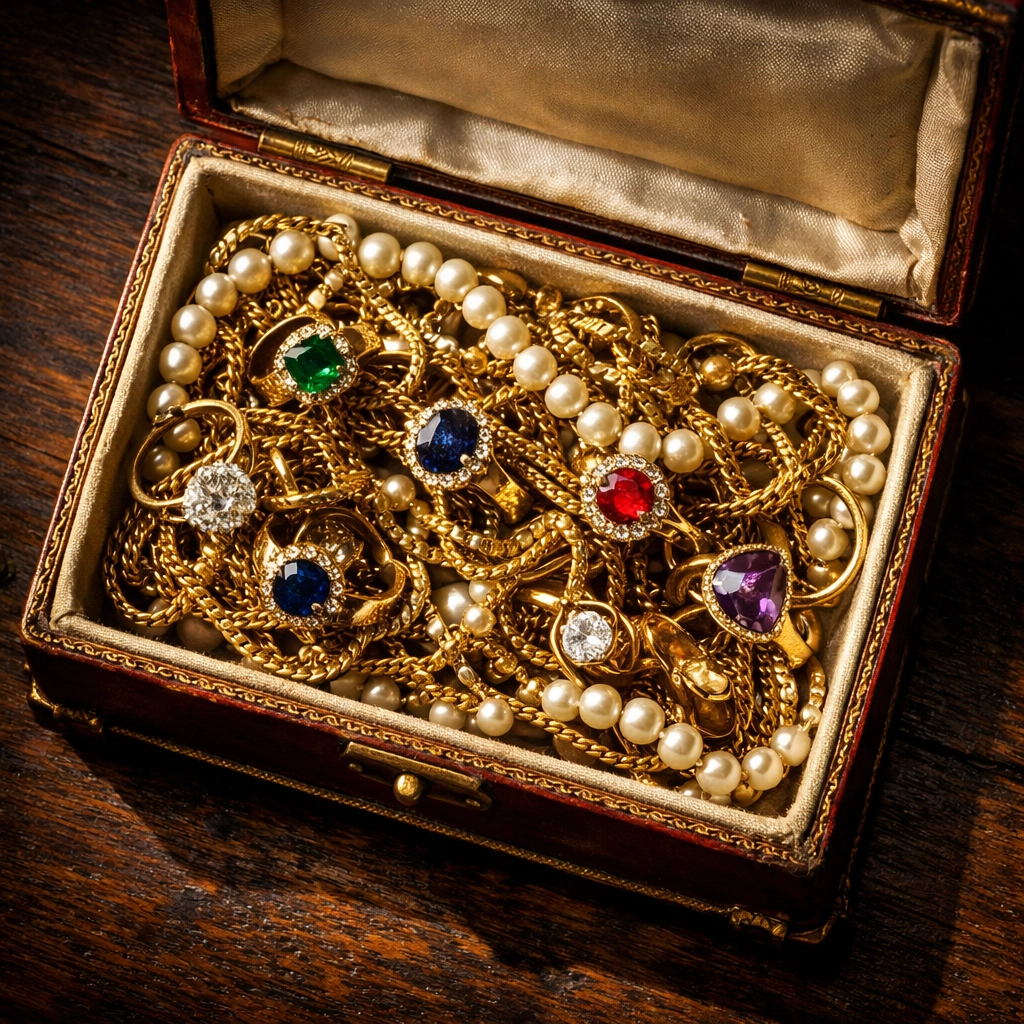
Here's where most families make their biggest mistake: they pre-sort. They decide what's "valuable" and what's "junk" before calling us, and they end up donating or tossing pieces that could have brought in hundreds or even thousands of dollars.
We've seen it happen too many times. Someone drops off a bag of "costume jewelry" at Goodwill, keeping only the pieces with obvious gemstones. Meanwhile, that bag contained a signed Trifari brooch worth $300, a sterling silver bracelet worth $150 in melt value alone, and a vintage Monet necklace that collectors would have bid up to $200.
Our golden rule: Let us look at everything before you make any decisions.
What Actually Has Value (The List Might Surprise You)
Gold, Even the "Broken" Stuff
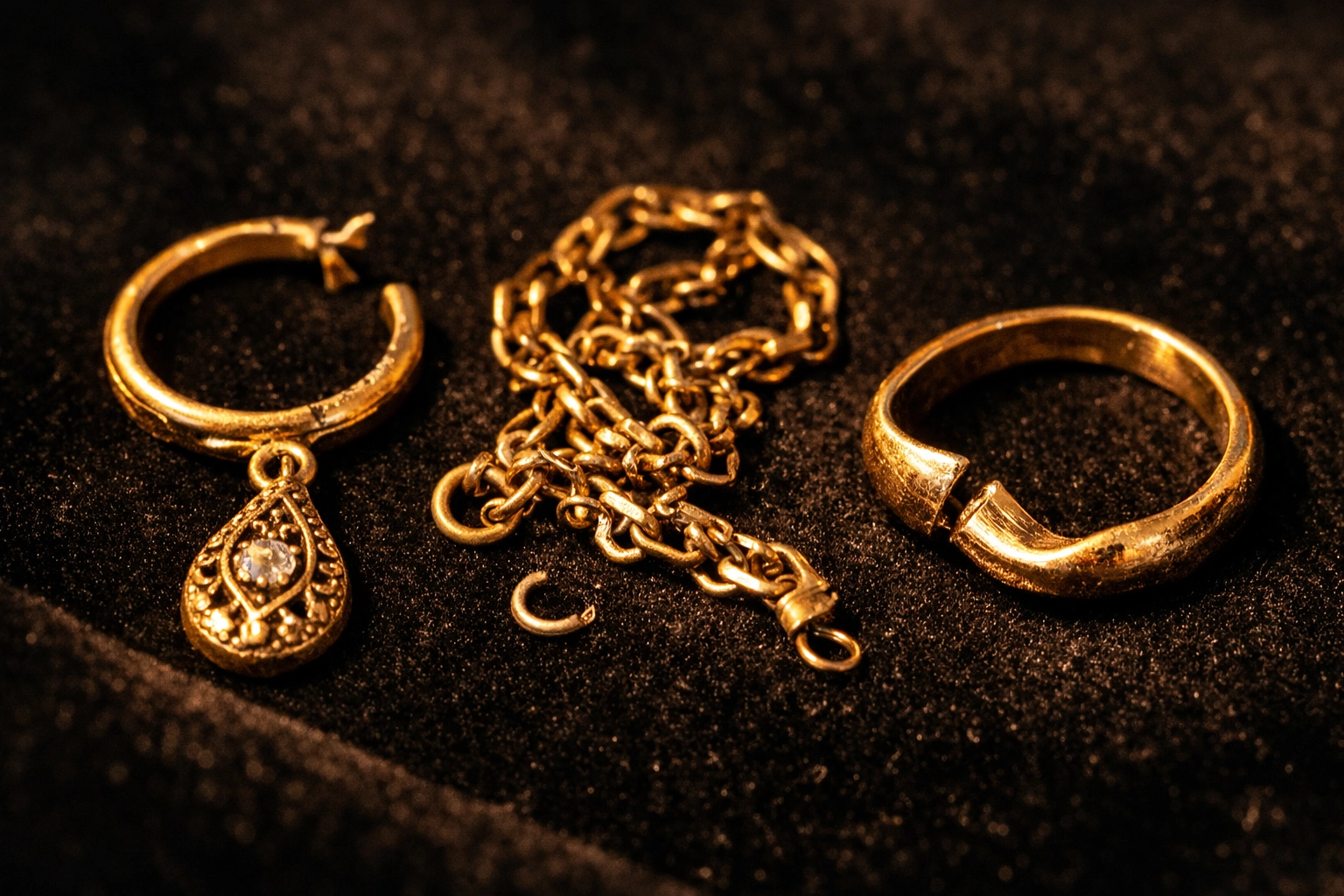
That broken gold chain with the missing clasp? The single gold earring without its mate? The bent gold ring you've been meaning to get resized for 20 years? All of it has what we call "melt value."
With gold prices where they are in 2026, even small pieces add up fast. A 14k gold chain weighing just half an ounce could be worth over $1,300 in gold content alone. And here's the thing, we don't need matching sets or perfect condition. Gold is gold.
We've helped Columbus families discover that their "junk drawer jewelry" contained several thousand dollars worth of gold pieces they'd completely forgotten about. One Powell family found $4,200 worth of gold items in a shoebox their mom had labeled "old broken stuff."
Sterling Silver (More Valuable Than You Think)
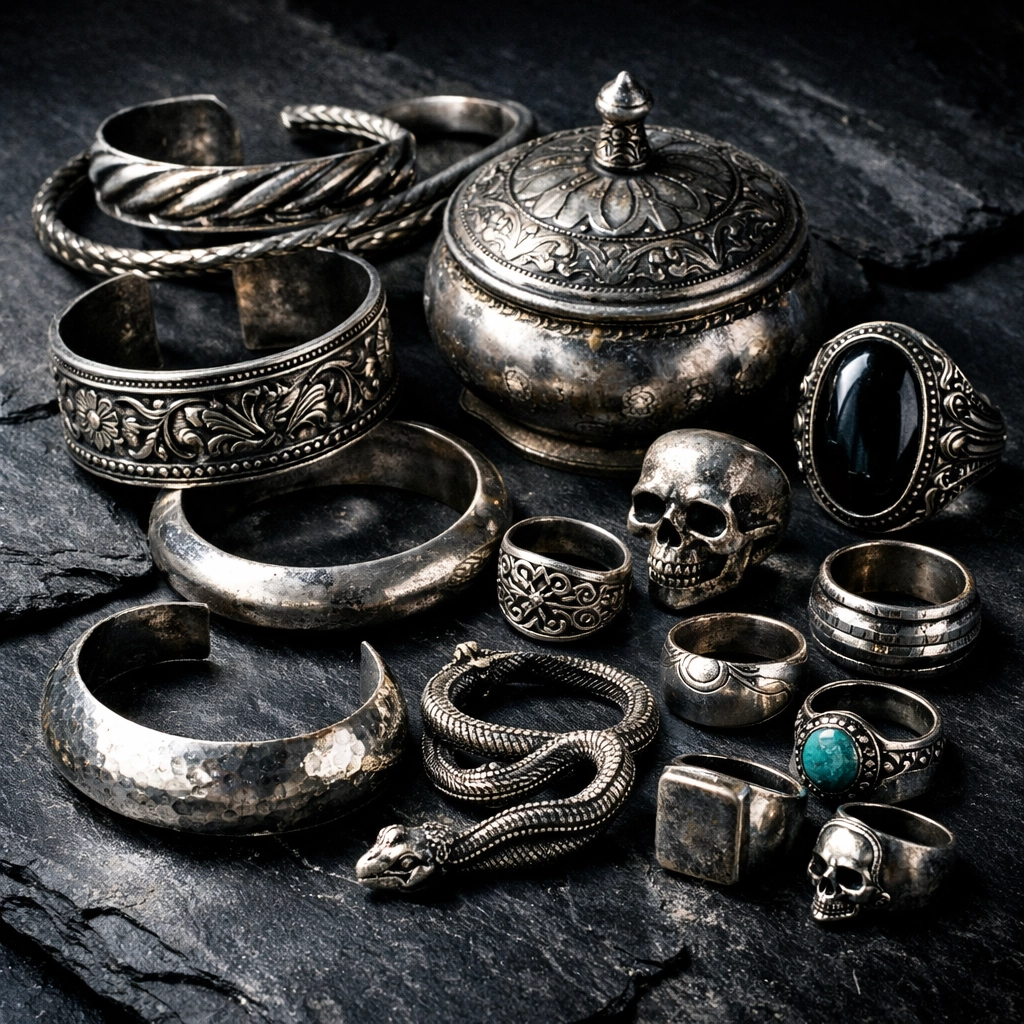
Sterling silver has also seen strong price increases, with forecasts suggesting silver could reach $75-78 per ounce by October 2026. That's driven partly by increased industrial demand for green technologies, but it's great news for anyone holding sterling pieces.
Sterling silverware, jewelry, and decorative items all have value. Even tarnished pieces that "look terrible" are worth their weight. We recently sold a heavily tarnished sterling bracelet for $180, the buyer was thrilled to polish it up themselves.
Designer Costume Jewelry
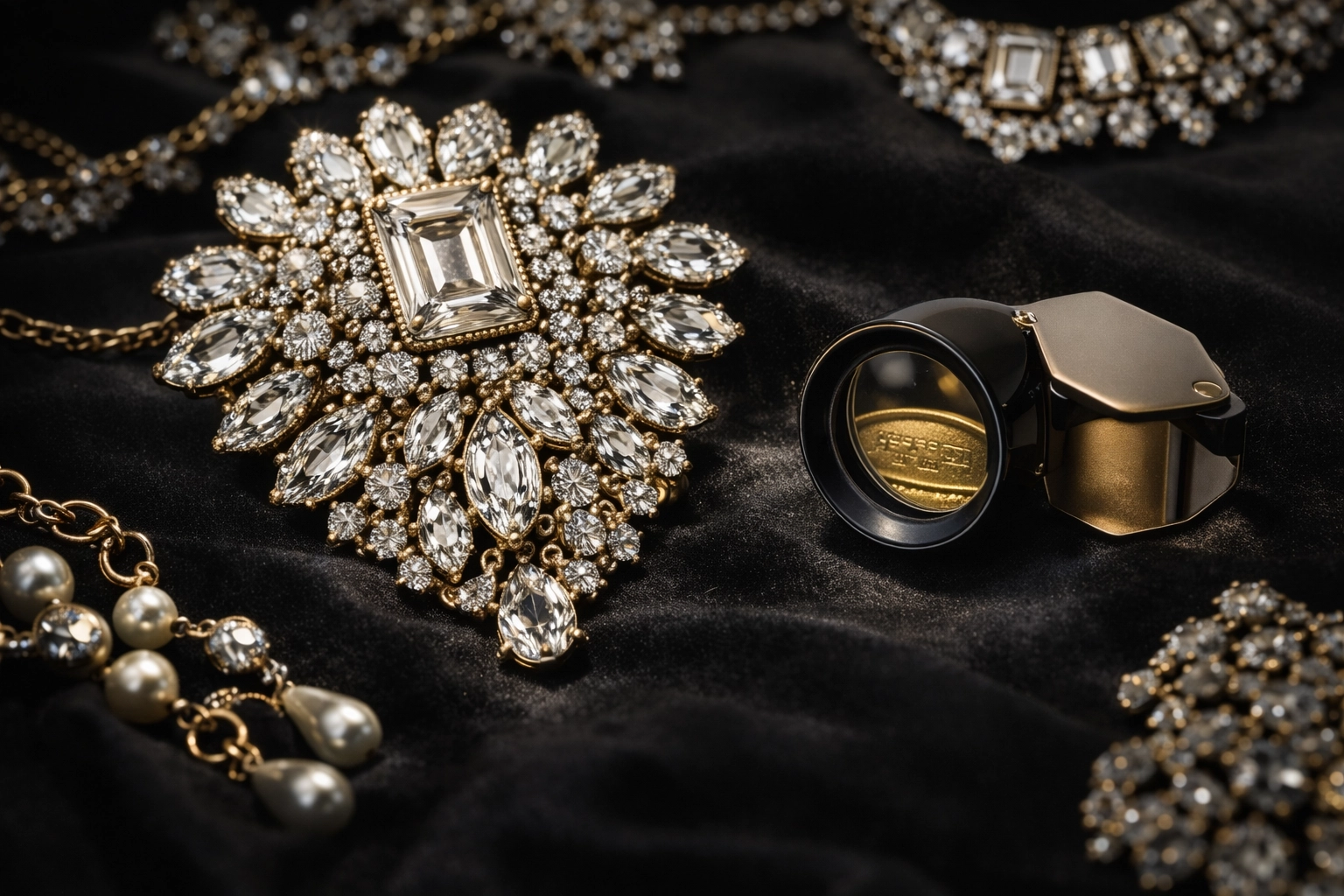
Not all valuable jewelry contains precious metals—and this is where “insider” knowledge really pays off. The big three we love seeing in Central Ohio estates are Trifari, Eisenberg, and Hattie Carnegie. When those names show up (even on a piece that looks like it came out of a random tangle of necklaces), collectors pay attention.
Here’s the sneaky part: truly good designer costume jewelry often doesn’t scream “expensive” until you know what you’re looking at. Kelly is the “research queen” for a reason—she’s looking for the little tells collectors care about: a clean maker’s mark placement, higher-end stone settings and prong work, weight that feels substantial in-hand, and that “too good to be craft-fair” construction you only notice once you’ve handled the real deal.
And yes—Hattie Carnegie is a perfect example. Her vintage pieces are often bold, beautifully made, and wildly collectible (especially statement brooches and rhinestone designs). If you don’t know the name, it’s easy to toss it in the “costume” pile and never realize you just gave away a piece buyers actually hunt for.
That’s exactly why we ask to see everything. We’ve pulled Trifari, Eisenberg, and Hattie Carnegie gems out of “junk jewelry” bags more times than we can count—because the value is in the details.
Fine Jewelry and Gemstones
Of course, pieces with diamonds, rubies, sapphires, emeralds, and other precious stones often have significant value. But here's something many people don't realize: the setting matters too.
An older diamond ring in a platinum or 18k gold setting might be worth more for the craftsmanship and materials than for the diamond itself. Art Deco settings, Victorian designs, and mid-century modern pieces attract collectors who appreciate the artistry.
We don't just look at the center stone, we evaluate the entire piece, including the era, the metalwork, and the overall design.
Why the 2026 Market Benefits Columbus Sellers
The combination of high precious metal prices and strong collector demand creates ideal selling conditions. But there's another factor working in your favor: online auction platforms have dramatically expanded the buyer pool.
Ten years ago, selling high-end jewelry meant finding local buyers or consigning to a shop that took a hefty percentage. Today, we can list your pieces on specialized platforms like LiveAuctioneers, where collectors from across the country (and internationally) can bid on your items.
This matters enormously for pricing. Instead of hoping the right buyer happens to walk into a local estate sale, we're putting your jewelry in front of thousands of potential buyers who are actively searching for exactly what you're selling.
Our LiveAuctioneers Experience
We've used LiveAuctioneers successfully for high-value jewelry, antiques, and collectibles, and the results speak for themselves. Pieces that might bring $200-300 at a local sale often sell for $500-800 (or more) when exposed to a national audience of serious collectors and dealers.
The platform is particularly effective for:
Signed designer jewelry
Antique and estate jewelry
Pieces with unique gemstones or unusual settings
Complete sets or collections
Items with interesting provenance or history
For less valuable items, we use other platforms and methods to ensure everything sells at the best possible price point. The goal is maximizing your return across your entire collection, not just the star pieces.
The "But It's Just..." Mindset
We hear certain phrases all the time:
"But it's just costume jewelry..." "But it's just a broken chain..." "But it's just my old class ring..." "But it's just some earrings I never wore..."
Here's the truth: there's no such thing as "just" when it comes to jewelry. Every piece deserves a proper evaluation before you decide its fate.
That costume jewelry might include valuable designer pieces. That broken chain might be 18k gold. That class ring might have surprising gold weight. Those unworn earrings might be exactly what a collector has been searching for.
Common Valuable Items Families Almost Donate
Based on our years of experience with Central Ohio estates, here are items that families frequently almost give away without realizing their value:
Gold dental work (yes, really: it's still gold)
Charm bracelets with gold or sterling charms
Men's class rings and fraternity jewelry (often heavy gold content)
Religious jewelry (crosses, mezuzahs, medals in precious metals)
Vintage watches (even non-working ones can have value)
Pocket watch chains (often gold-filled or solid gold)
Stick pins and tie tacks (frequently 10k or 14k gold)
Cufflinks (especially vintage or designer pairs)
Brooches and pins from any era
Beaded necklaces (some vintage pieces are quite valuable)
None of these seem particularly exciting at first glance, but we've seen every single one of these categories bring in hundreds of dollars for surprised Columbus families.
When to Contact Us
The best time to reach out is before you start sorting, donating, or tossing anything. Ideally, we'd love to evaluate your jewelry while you're still in the early planning stages of an estate cleanout, downsizing project, or major life transition.
Here's why early contact matters:
Once items leave the house: whether they go to Goodwill, get divided among family members, or accidentally end up in the trash: we can't help you recover their value. We've had heartbreaking conversations with families who called us after they'd already donated several boxes of "old jewelry" that likely contained thousands of dollars worth of valuables.
The evaluation itself is straightforward. We can often provide initial assessments on-site during a home visit, or you can bring items to us. For pieces that might have significant value (or situations where you need documentation for insurance, taxes, or probate), we may recommend a professional appraisal or gemological evaluation—and we’ll help coordinate that with qualified third-party appraisers when needed. Buckeye does not provide official appraisals directly.
The Bottom Line for 2026
With precious metal prices at historic highs and strong demand from collectors, this is genuinely an excellent time to turn your unwanted jewelry into cash. But the opportunity only exists if you give us a chance to evaluate your pieces before they disappear into donation bins or trash bags.
We're not looking to pressure you or convince you to sell family heirlooms you want to keep. We're here to help you make informed decisions about what's valuable, what's not, and what your best options are for each piece.
Think of us as your jewelry translators: we speak the language of karats, hallmarks, designer signatures, and gemstone quality so you don't have to. Our job is making sure you understand what you have before you decide what to do with it.
So before you sort that jewelry box, clear out that dresser drawer, or pack up your parent's estate, give us a call. Let's make sure you're not accidentally donating your inheritance or tossing your nest egg. With 2026's market conditions, your jewelry box really might be worth thousands: but only if we get the chance to look.
Comments