
Hidden Treasures: How to Spot High-Value Antiques in Your Attic
You know that feeling when you're cleaning out a closet and you find a twenty-dollar bill in an old jacket pocket? Now imagine that feeling, but instead of a crumpled bill, it's a piece of pottery worth hundreds, or even thousands, of dollars.
It happens more often than you'd think.
Every week, we walk into homes across Central Ohio and find items that families had no idea were valuable. A dusty silver tea set shoved in a corner. A box of "old toys" destined for the donation bin. A piece of furniture that's been in the family so long, nobody remembers where it came from.
The truth is, your attic (or basement, garage, or that one spare room you never go into) might be hiding some real treasures. The trick is knowing what to look for, and more importantly, what NOT to do before you find out what you've got.
Before You Do Anything: Give Us a Call
Here's the thing we tell every family we work with: please contact us before the dumpster arrives.
We can't tell you how many times we've heard, "Oh, we already threw that out" or "We donated a bunch of stuff last weekend." And sometimes, that "stuff" included items that could have fetched serious money at auction.
We're not trying to make anyone feel bad, cleanouts are stressful, and the instinct to clear out quickly is totally understandable. But a quick walkthrough with our team can help you identify what's worth keeping, what might sell well, and what's truly ready for the donation pile.
Not sure what we're looking for? Check out the items we love to sell on our website. That list is a great starting point, but we're always finding surprises that aren't on there, too.
Now, let's talk about how YOU can start spotting potential treasures on your own.
The Maker's Mark Hunt: Your First Clue to Value
One of the easiest ways to identify a potentially valuable antique is to look for maker's marks, those little stamps, signatures, or symbols that tell you who made an item and when.
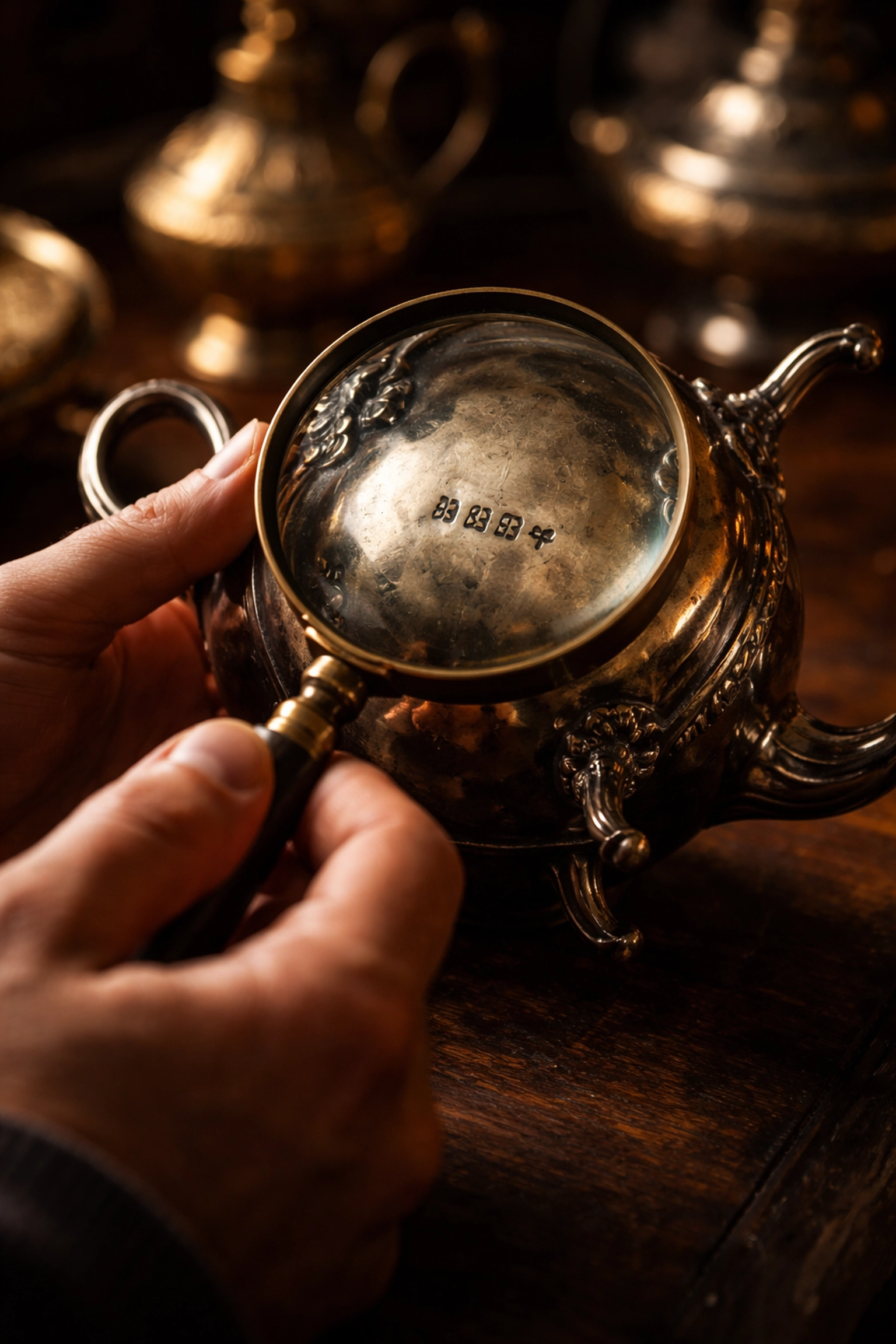
On Silver
Silver items almost always have hallmarks, usually stamped on the bottom or back. These tiny marks can tell you the manufacturer, the country of origin, and even the year it was made. A magnifying glass is your best friend here, these marks can be small and worn down over time.
Pro tip: If you see "925" or "Sterling," you've got real silver. If you see "EPNS" (Electroplated Nickel Silver) or "silver plate," it's not solid silver, but it might still have value depending on the maker.
On Pottery and Porcelain
Flip that vase or teacup over! Most quality pottery and porcelain pieces have marks on the bottom that were applied before firing. Names like Roseville, Rookwood, Weller, or McCoy (all with Ohio connections, by the way!) can indicate significant value. European marks from companies like Meissen, Royal Copenhagen, or Limoges are also worth researching.
On Furniture
Furniture marks are a bit trickier because they're often hidden. Check the back of pieces, inside drawers, or underneath tabletops. Look for paper labels, stamps burned into the wood, or metal tags. Names like Stickley, Herman Miller, or Heywood-Wakefield can make a big difference in value.
Material Matters: Real vs. Reproduction
Not everything that looks old IS old, and not everything that looks valuable IS valuable. Here's how to tell the difference.
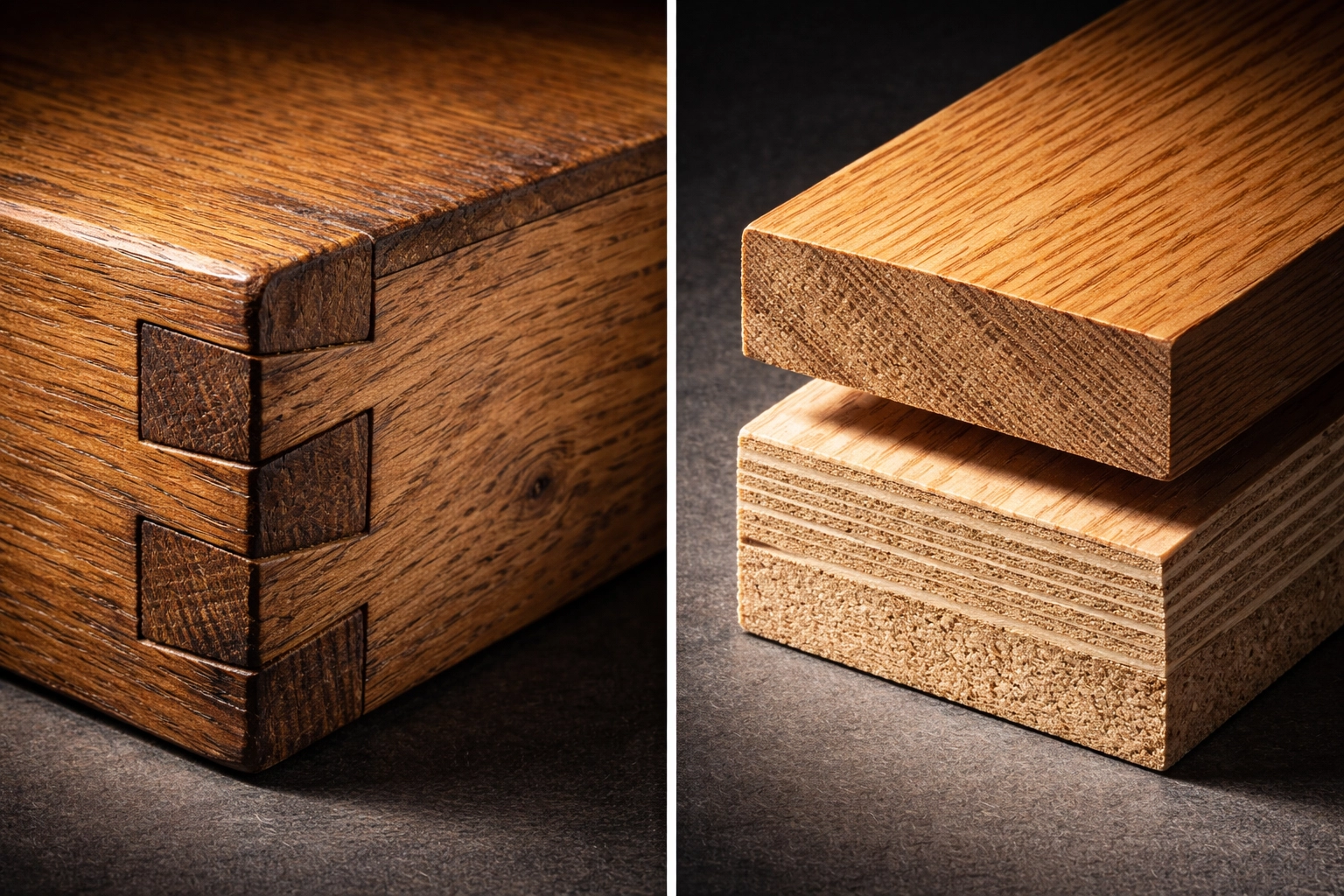
Solid Wood vs. Veneer
Solid wood furniture is generally more valuable than veneered pieces (though high-quality antique veneer work can be an exception). Here's a quick test:
Look at the edges. If you can see thin layers of wood glued over a different material, that's veneer.
Check the weight. Solid wood is heavy. Really heavy.
Examine the grain. On solid wood, the grain pattern continues from the top surface down through the edges. On veneer, the edge grain won't match.
Look for wear. Authentic antique wood shows natural wear patterns, slightly rounded edges, fading in areas that got more sun exposure, and that beautiful patina that only comes with age.
Real Gold vs. Costume Jewelry
This one trips people up all the time. That chunky bracelet from Grandma's jewelry box might be solid gold, it might be sterling silver, or it might be costume. And honestly? We love costume jewelry too. While real gold and gemstones are always worth a closer look, certain designer costume jewelry pieces can sell for surprisingly high prices, so they shouldn’t be overlooked.
Bottom line: we look for gold, sterling silver, and designer costume jewelry (and they can all hold real value at auction).
Here’s what to look for:
Stamps matter. Real gold will be stamped with its karat weight (10K, 14K, 18K, etc.). "GF" means gold-filled, "GP" means gold-plated, both are worth less than solid gold but aren't worthless.
Check for discoloration. If the gold is wearing off and showing a different color underneath, it's plated.
The magnet test. Gold isn't magnetic. If a piece jumps to a magnet, it's not real gold (though this isn't foolproof, some costume jewelry uses non-magnetic metals too).
When in doubt, bring it to a professional. We've seen "costume" pieces turn out to be the real deal, and vice versa.
Items We Love: Our Specialty Sweet Spots
While we can help with all kinds of estate items, there are certain categories where we really get excited. These are the things that tend to perform well at auction and that our team has particular expertise in evaluating.

Vintage Toys and Games
Those old toys in the attic? Don't toss them! Vintage toys from the 1960s, 70s, and 80s are incredibly collectible right now. We're talking Star Wars figures, Barbie dolls, Hot Wheels, vintage board games, and tin toys from even earlier eras. Condition matters, but even played-with toys can have value.
Fine Jewelry and Watches
Beyond the gold-vs-costume question, we love helping families discover the value in estate jewelry. Vintage and antique pieces often have value beyond just their metal content, the craftsmanship, design era, and maker all factor in. And don't overlook watches! Brands like Rolex, Omega, and even some vintage Timex pieces can be surprisingly valuable.
Specialty Collections
Did your loved one collect anything? Coins, stamps, sports memorabilia, vinyl records, vintage cameras, military items, fishing lures, advertising signs... the list goes on. Collections that might seem "random" to the family often have dedicated buyers who will pay premium prices for the right pieces.
Mid-Century Modern Furniture
That "old" furniture from the 1950s and 60s that doesn't match anything else? It might be mid-century modern, and it might be worth a lot. Clean lines, tapered legs, and organic shapes are hallmarks of this highly collectible style.
The Golden Rule: Don't Clean, Don't Restore, Don't "Fix"
This is so important that we're going to say it twice: Do not clean, polish, restore, or repair antiques before having them evaluated.

We know it's tempting. That tarnished silver would look so much better shiny, right? That old painting just needs a quick wipe-down. That wobbly chair leg could use some wood glue.
Please resist the urge.
Here's why:
Patina is valuable. That aged look on bronze, silver, and wood is called patina, and collectors actually WANT it. Polishing it away can significantly reduce value.
Original condition matters. A piece in original condition: even if that condition is "dusty and worn": is often worth more than one that's been cleaned or repaired.
You might cause damage. Using the wrong cleaning product or technique can permanently harm an antique. We've seen irreversible damage from well-meaning clean-up attempts.
Restoration should be done by professionals. If an item does need work, a professional restorer knows how to do it in a way that preserves value.
The best thing you can do? Leave it alone and let us take a look first.
Ready to Discover What You've Got?
Whether you're facing a full estate cleanout, helping aging parents downsize, or just curious about that mysterious box in the back of the closet, we're here to help.
Our team can walk through the home with you, identify items with potential value, and give you honest guidance about what's worth selling, donating, or discarding. No pressure, no judgment: just friendly expertise from folks who genuinely love helping Central Ohio families through these transitions.
Contact us today to schedule a consultation. You might be surprised by the treasures hiding in plain sight.
Comments